Want to be in the loop?
subscribe to
our notification
Business News
VN'S GROWTH AMONG STRONGEST IN LARGE DEVELOPING ASEAN ECONOMIES
The WB also predicted that State-owned enterprise (SOE) reforms in Vietnam, which include improving transparency and governance, could reduce drains on fiscal resources.
Banking sector reforms would be priorities for improving efficiency and the allocation of capital in Vietnam, according to the WB.
Under the report, the WB has downgraded its 2016 global growth forecast to 2.4 per cent from the 2.9 per cent it projected in January. The move is due to sluggish growth in advanced economies, stubbornly low commodity prices, weak global trade, and diminishing capital flows.
According to the latest update report, commodity-exporting emerging market and developing economies have struggled to adapt to lower prices for oil and other key commodities, and this accounts for half of the downward revision. Growth in these economies is projected to advance at a meagre 0.4 per cent pace this year, a downward revision of 1.2 percentage points from the January outlook.
"This sluggish growth underscores why it is critically important for countries to pursue policies that will boost economic growth and improve the lives of those living in extreme poverty," World Bank Group President Jim Yong Kim said.
"Economic growth remains the most important driver of poverty reduction, and that is why we are very concerned that growth is slowing sharply in commodity-exporting developing countries due to depressed commodity prices," he said.
Commodity-importing emerging markets and developing economies have been more resilient than exporters, although the benefits of lower prices for energy and other commodities have been slow to materialise. These economies are forecast to expand at a 5.8 per cent rate in 2016, down modestly from the 5.9 per cent pace estimated for 2015, as low energy prices and the modest recovery in advanced economies support economic activity.
Among major emerging market economies, China is forecast to grow at 6.7 per cent in 2016 after 6.9 per cent last year. India's robust economic expansion is expected to hold steady at 7.6 per cent, while Brazil and Russia are projected to remain in deeper recessions than forecast in January. South Africa is forecast to grow at a 0.6 per cent rate in 2016, 0.8 of a percentage point more slowly than the January forecast.
A significant increase in private sector credit – fuelled by an era of low interest rates and, more recently, rising financing needs – raise potential risks for several emerging market and developing economies, the report finds.
"As advanced economies struggle to gain traction, most economies in South and East Asia are growing solidly, as are commodity-importing emerging economies around the world," World Bank Chief Economist and Senior Vice President Kaushik Basu said.
"However, one development that bears caution is the rapid rise of private debt in several emerging and developing economies. In the wake of a borrowing boom, it is not uncommon to find non-performing bank loans, as a share of gross loans, to quadruple," he said.
In an environment of anaemic growth, the global economy faces pronounced risks, including a further slowdown in major emerging markets, sharp changes in financial market sentiment, stagnation in advanced economies, a longer-than-expected period of low commodity prices, geo-political risks in different parts of the world, and concerns about the effectiveness of a monetary policy in spurring stronger growth. The report introduces a tool to quantify risks to the global outlook and finds that they are now more tilted to the downside than in January.
"Flagging growth prospects in emerging markets and developing economies would slow or even reverse their progress in catching up to income levels of advanced economies," Development Economic Prospects Group Director Ayhan Kose said. "However, some commodity-importing emerging and developing economies have been able to register steady or accelerating growth over the last three years."
Source: VNEP
Related News
BANKING / FINANCE / INSURANCE / TAX
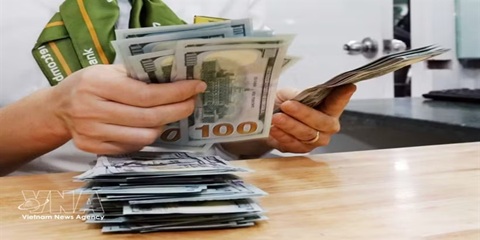
REMITTANCES TO HCM CITY RISE NEARLY 40% IN Q3
Remittances to HCM City reached more than US$2.83 billion in the third quarter of this year, up 39.5 per cent from the previous quarter and 3.6 per cent year-on-year. This was the first quarter showing positive annual growth this year, helping narrow the decline in remittance inflows over the first nine months. According to the State Bank of Vietnam (SBV)’s Regional Branch 2, remittances transferred to HCM City through credit institutions and economic organisations totalled $2.835 billion in Q3, an increase of more than $802 million from the previous quarter.

TECHNOLOGY
TECH SECTOR GROWTH OPENS UP OPPORTUNITIES FOR VIỆT NAM TO GO GLOBAL
The growth of the electronics, semiconductor and high-tech sectors worldwide is opening up a variety of opportunities for Vietnamese enterprises to integrate more deeply into the global supply chain. However, to become suppliers for these corporations, domestic enterprises must meet rigorous standards regarding quality, technology, productivity and order fulfilment capabilities.
VIETNAM ECONOMY INVESTMENT
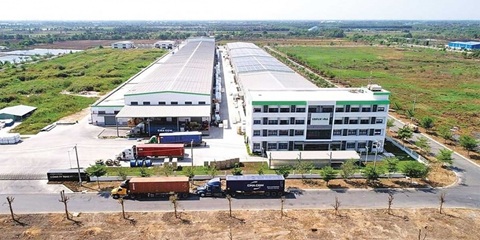
FOREIGN INVESTORS SEEKING A SYNCHRONISED MANUFACTURING ECOSYSTEM
Instead of focusing only on land costs and incentives as usual, foreign investors are seeking a synchronised manufacturing ecosystem, from stable power supply and logistics to shared infrastructure and the convenience of completing residence procedures for experts to serve their long-term investment in the country.

MEMBER CORNER / PROMOTIONS
SENTRYSAFE FHW40200 – PROTECT YOUR VALUABLES, ENJOY PEACE OF MIND!
Looking for a reliable solution to protect your important documents, cash, and valuables from fire and water damage? Genuine SENTRYSAFE - Reliable protection for your valuables and peace of mind! Contact Sen Wai Vietnam for more information and personalized product recommendations.
PROPERTY / INDUSTRIAL ZONE
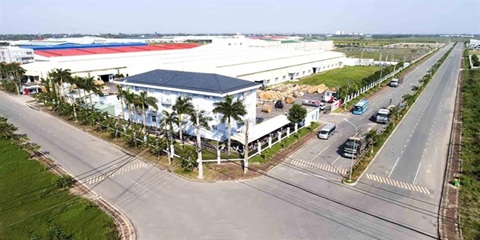
HCM CITY ATTRACTS US$5.7 BILLION INTO EXPORT PROCESSING AND INDUSTRIAL ZONES
HCM City attracted US$5.7 billion in domestic and foreign investment into its export processing and industrial zones during the first nine months of 2026. The figure exceeded the city's full-year target by 31 per cent, highlighting strong momentum in high-quality industrial investment under Resolution No.10-NQ/TW. Total investment reached 131 per cent of the 2026 target of $4.25 billion and represented a 29 per cent increase compared with the same period in 2025, according to the city's Export Processing and Industrial Zones Authority (HEPZA).
INFRASTRUCTURE / CONSTRUCTION / LOGISTIC / PORT
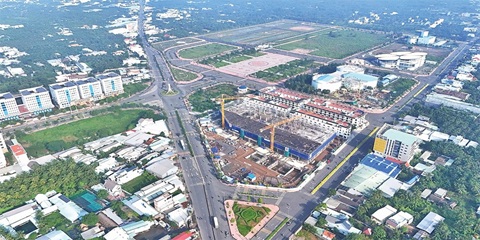
DONG THAP PROVINCE STEPS UP INDUSTRIAL EXPANSION AND INFRASTRUCTURE CONNECTIVITY
Accelerating public investment, strengthening inter-regional connectivity, and expanding industrial land are helping Dong Thap efficiently bolster competitiveness and drive economic growth. Following the 2025 merger of the former Dong Thap and Tien Giang provinces, the expanded Dong Thap province in the Mekong Delta faces mounting pressure to accelerate infrastructure development and strengthen connectivity among local economic zones, urban areas, industrial parks (IPs), and production centres.
Events Sponsors






















